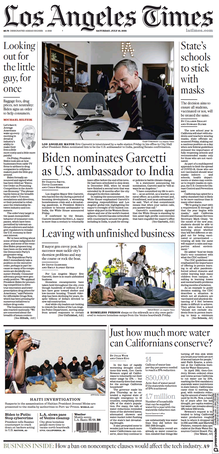
The Los Angeles Times, an institution synonymous with Southern California, finds itself at a critical juncture in the evolving landscape of American journalism. A beacon of news since its founding in 1881, the paper has chronicled the growth of a bustling metropolis, celebrated its triumphs, and uncovered its controversies. Yet, like many legacy media organizations, the Los Angeles Times is grappling with unprecedented challenges in the digital age. From strategic shifts in editorial focus to significant staff reductions, most notably the impactful 2024 layoffs, the journey of this iconic newspaper reflects the broader struggles and adaptations of the entire industry.
A Storied Legacy Meets Modern Realities
The history of the Los Angeles Times is as dynamic as the city it serves. Established in 1881, it quickly became an integral part of Los Angeles, initially developing a reputation for fervent civic boosterism, championing the region's growth and development. This early period was also marked by its strong opposition to labor unions, a stance that infamously led to the bombing of its headquarters in 1910, a pivotal moment in American labor history. Fast forward to the 1960s, under the transformative leadership of publisher Otis Chandler, the newspaper elevated its profile considerably, embracing a more national and international journalistic scope, solidifying its place among the nation's most respected news organizations.
For decades, the Los Angeles Times has been a powerhouse of journalism, accumulating over 40 Pulitzer Prizes for its groundbreaking reporting, photography, and commentary. These accolades underscore its commitment to investigative journalism and its role as a critical watchdog. As of 2022, the paper proudly reported 500,000 online subscribers, positioning it as the fifth-largest among U.S. newspapers in digital reach and the sixth-largest overall in the nation, maintaining its dominance as the largest newspaper in the Western United States. This impressive digital subscriber base highlights the paper's success in transitioning a significant portion of its readership online, a crucial step for any modern media outlet.
However, the past two decades have presented a complex web of ownership changes, staff reductions, and other controversies, reflecting a turbulent period for print journalism globally. A significant organizational shift occurred in July 2018 when the Los Angeles Times moved out of its historic headquarters in downtown Los Angeles to a modern facility in El Segundo, near Los Angeles International Airport. This relocation symbolized not just a change of address but a symbolic break from certain traditions, embracing a more contemporary operational model. Furthermore, a landmark moment for its staff took place in January 2018 when they voted to unionize, subsequently finalizing their first union contract in October 2019. This move underscored the desire among journalists to have a greater voice in their working conditions and to safeguard the integrity of their profession amidst industry-wide upheaval.
Navigating the Digital Tides: Shifting Focus and Financial Headwinds
Since around 2010, the Los Angeles Times, much like other regional newspapers across California and the broader United States, has faced a sustained decline in its traditional print readership. This trend is not isolated but indicative of a fundamental shift in how people consume news, largely driven by the internet and the rise of digital platforms. The challenge for news organizations has been to not only attract digital subscribers but also to generate sufficient revenue from online content to offset declining print advertising and circulation.
In response to these evolving dynamics, the Los Angeles Times has strategically recalibrated its editorial focus. Since 2020, there has been a discernible pivot away from extensive national and international news coverage towards a more intensive focus on California, and particularly Southern California, news. This strategic shift aims to leverage the paper's deep local roots and expertise, providing unique value to its core audience that national news aggregators cannot replicate. By concentrating on issues that directly impact the lives of Californians – from politics and policy to cultural events and environmental challenges – the Los Angeles Times seeks to strengthen its bond with the community it serves and reinforce its identity as the definitive voice of the region.
However, adapting the editorial strategy does not fully insulate a media organization from the harsh financial realities of the 21st century. The costs associated with quality journalism – maintaining investigative teams, foreign bureaus (even scaled back), and robust digital infrastructure – remain substantial. Owner Patrick Soon-Shiong, through the Los Angeles Times Media Group and its publishing entity California Times, has invested significantly, but the path to sustainable profitability in the digital era is notoriously difficult. Generating sufficient revenue from subscriptions, digital advertising, and other innovative streams requires constant experimentation and adaptation.
The Tumultuous Start to 2024: Layoffs and Industry Reckoning
The financial pressures culminated in a particularly challenging period for the Los Angeles Times at the beginning of 2024. In January, the paper announced its largest percentage reduction in headcount, a staggering layoff exceeding 20 percent of its staff. This drastic measure impacted a broad spectrum of employees, including highly experienced senior editorial positions, a clear indicator of the severity of the financial challenges facing the organization. These layoffs were explicitly undertaken in an effort to "stem the tide of financial losses," a grim reality check for an industry already reeling from years of contraction.
The 2024 layoffs at the Los Angeles Times are more than just a corporate restructuring; they represent a significant blow to the journalistic capacity of one of the nation's most important regional papers. Each reduction in staff, particularly seasoned professionals, means a potential loss of institutional knowledge, reporting depth, and vital connections within the community. For the remaining staff, such events can lead to increased workload, stress, and a challenging environment for maintaining morale, even for a unionized staff. This situation is unfortunately not unique to the Los Angeles Times; countless newspapers across the U.S. have undergone similar, if not more severe, contractions in recent years, highlighting a systemic crisis in local and regional journalism.
Broader Implications for Journalism and Local News
The challenges faced by the Los Angeles Times resonate across the entire media ecosystem. The decline of traditional advertising revenue, the shift of readership to free online content (or inexpensive subscriptions), and the rise of social media as a primary news source have created a perfect storm for newspapers. The layoffs at the Los Angeles Times underscore the immense pressure on news organizations to find viable business models that can support quality, in-depth reporting. When papers like the Los Angeles Times struggle, it has profound implications for civic engagement, government accountability, and the public's access to reliable information.
The Path Forward: Innovation, Community, and Sustaining Journalism
Despite the formidable hurdles, the future of the Los Angeles Times is not entirely without hope. The very act of cutting staff, while painful, is often a desperate measure to ensure the long-term survival of the institution. For the Los Angeles Times to thrive, or even merely survive, it must continue to innovate in its approach to news gathering, delivery, and monetization.
Key Strategies for Resilience:
- Deepening Local Roots: The pivot towards California and Southern California news is crucial. By delivering unparalleled coverage of local politics, culture, economy, and community issues, the Los Angeles Times can solidify its position as an indispensable resource for its target audience.
- Diversifying Revenue Streams: Relying solely on subscriptions and traditional advertising is no longer sufficient. Exploring new revenue models, such as events, sponsored content (clearly labeled), grants for investigative journalism, or even philanthropic support, could provide much-needed stability.
- Digital Innovation: Continuously enhancing the digital user experience, investing in multimedia storytelling, podcasts, newsletters, and interactive data visualizations can keep readers engaged and attract new, younger audiences.
- Community Engagement: Actively involving the community through reader forums, citizen journalism initiatives, and direct feedback loops can foster a stronger sense of ownership and loyalty. Making the newsroom more accessible and transparent can also rebuild trust.
- Advocating for the Value of Journalism: Educating the public about the cost and importance of quality, professional journalism is vital. Readers need to understand that subscribing to a reputable news source like the Los Angeles Times is an investment in their community and democracy.
Practical advice for readers who value the role of independent journalism: consider subscribing to the Los Angeles Times, even if you only read it digitally. Engage with their content, share important stories, and provide constructive feedback. Supporting local journalism is not just about news consumption; it's about sustaining a critical pillar of civic society.
The saga of the Los Angeles Times is a microcosm of the larger struggles and resilience within the media industry. From its origins as a booster of a burgeoning city to its current battle for financial stability and relevance in the digital age, the paper has constantly adapted. The 2024 layoffs are a stark reminder of the harsh economic realities, yet they also underscore the urgent need for innovative solutions and unwavering support for quality journalism. As the Los Angeles Times continues its journey, its ability to deliver essential news and maintain its legacy will depend on a combination of strategic foresight, journalistic excellence, and the enduring commitment of its readers and the community it so diligently serves.